Antenatal
Jaundice in Newborn Babies
September 19, 2026
|
35 views
Introduction
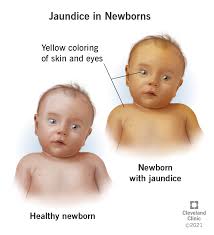
Jaundice is one of the most common conditions seen in newborn babies. It causes a baby's skin and the whites of the eyes to appear yellow because of an increased amount of a substance called bilirubin in the blood.
For many newborns, jaundice is mild and temporary. It commonly develops during the first few days of life as the baby's liver adjusts to processing bilirubin. However, jaundice should never simply be ignored. If bilirubin becomes very high, it can affect the baby's brain and, in severe cases, cause permanent neurological problems. This is why newborns with jaundice need appropriate observation, feeding support, follow-up, and bilirubin assessment when indicated.
The good news is that most cases are manageable, particularly when jaundice is identified early.
What Is Jaundice?
Jaundice is the yellow discoloration of the skin and the whites of the eyes caused by an increased level of bilirubin in the blood.
Bilirubin is produced naturally when old red blood cells are broken down. Normally, the liver processes bilirubin so that it can leave the body through stool and urine.
In newborns, several things make bilirubin accumulate more easily:
Babies have a relatively large number of red blood cells.
Newborn red blood cells have a shorter lifespan.
The newborn liver is still developing its ability to process bilirubin.
Babies may not feed effectively during the first few days.
Reduced feeding can result in fewer bowel movements and less bilirubin leaving the body.
Because of these factors, jaundice is very common during the newborn period.
What Is Bilirubin?
Bilirubin is a yellow pigment produced when red blood cells are broken down.
There are two major forms:
1. Unconjugated bilirubin
This is the form produced initially when red blood cells are broken down. It is processed by the liver before being eliminated.
Most ordinary newborn jaundice is related to an increase in unconjugated bilirubin.
2. Conjugated bilirubin
This is bilirubin that has already been processed by the liver.
An increase in conjugated or direct bilirubin is considered abnormal and may indicate an underlying liver or bile-flow problem. It requires medical assessment rather than being assumed to be ordinary physiological jaundice.
Why Do Newborn Babies Develop Jaundice?
There are several possible causes.
1. Physiological jaundice
This is the most common type.
It occurs because the baby's liver needs time to become efficient at removing bilirubin.
It usually:
Appears after the first 24 hours
Becomes more noticeable during the first several days
Gradually improves as the baby's liver matures
Does not usually require treatment if bilirubin remains below treatment levels and the baby is otherwise well
Most babies with uncomplicated jaundice recover without complications.
2. Jaundice associated with inadequate feeding
A newborn who is not taking enough milk may have fewer bowel movements and may become dehydrated or lose excessive weight.
Because bilirubin is eliminated partly through stool, inadequate feeding can contribute to increasing bilirubin levels.
This is why effective and frequent feeding is an important part of caring for a newborn with jaundice. The American Academy of Pediatrics recommends supporting breastfeeding and generally feeding newborns around 8 to 12 times per day during the early days.
3. Breast milk jaundice
Some healthy breastfed babies develop jaundice that lasts longer than the usual early newborn period.
This can occur despite the baby feeding well and gaining weight appropriately.
Breast milk jaundice is generally different from jaundice caused by inadequate milk intake. A baby with prolonged jaundice should still be assessed by a healthcare professional to make sure there isn't another cause.
4. Blood group incompatibility
Sometimes the mother's blood type and the baby's blood type are incompatible.
This can cause increased destruction of the baby's red blood cells and therefore increased bilirubin production.
Examples include:
ABO incompatibility
Rh incompatibility
These conditions can cause bilirubin to rise more rapidly and may require closer monitoring and treatment.
5. G6PD deficiency
Glucose-6-phosphate dehydrogenase deficiency, commonly called G6PD deficiency, is an inherited condition that can make red blood cells more vulnerable to breakdown.
It can contribute to significant newborn jaundice.
This is particularly important in populations where G6PD deficiency is common.
A healthcare professional may consider G6PD deficiency when a baby develops significant or unexpectedly severe jaundice.
6. Prematurity
Premature babies are more likely to develop jaundice because their liver is less mature.
They may also have greater difficulty feeding effectively.
Premature or low-birth-weight babies therefore often require closer monitoring.
7. Bruising during birth
A baby who has significant bruising or a collection of blood under the scalp may produce additional bilirubin as the blood is broken down.
This can increase the likelihood of jaundice.
8. Infection
Some infections can cause or worsen jaundice.
A jaundiced baby who is also:
Feverish
Very sleepy
Feeding poorly
Breathing abnormally
Less active than usual
needs prompt medical assessment.
9. Liver or bile-flow problems
Less commonly, jaundice may be associated with liver disease or problems with the flow of bile.
Examples include:
Hepatitis
Biliary atresia
Other liver or metabolic disorders
Persistent jaundice, particularly jaundice involving abnormal direct bilirubin, requires medical evaluation.
When Does Newborn Jaundice Usually Appear?
The timing of jaundice is important.
Jaundice during the first 24 hours
Jaundice that becomes visible within the first 24 hours after birth is not considered routine physiological jaundice and requires prompt medical assessment.
The American Academy of Pediatrics identifies jaundice in the first 24 hours as an important risk factor requiring attention.
Jaundice after the first 24 hours
Jaundice appearing after the first day is common, but the baby's bilirubin level and overall condition determine whether it is safe to observe or requires treatment.
Jaundice lasting longer than expected
Jaundice that persists should also be assessed, especially when it is worsening, accompanied by pale stools or dark urine, or associated with poor feeding or poor growth.
Signs and Symptoms of Newborn Jaundice
The most obvious sign is yellow discoloration.
You may notice yellowing:
On the face
Around the eyes
On the chest
On the abdomen
On the arms and legs
On the palms and soles in more significant cases
Inside the mouth
The whites of the eyes may also appear yellow.
Jaundice often begins on the face and may spread downward toward the chest and legs as bilirubin levels increase.
How to Check Your Baby for Jaundice
Parents may notice jaundice by looking at the baby's skin and eyes in good lighting.
Jaundice can be more difficult to see on darker skin.
Looking at the whites of the eyes and the inside of the mouth can sometimes make yellow discoloration easier to recognize.
However, looking at the baby's skin cannot tell you the bilirubin level.
If jaundice is suspected, a healthcare professional may need to measure bilirubin using:
A skin bilirubin meter
A blood test
The bilirubin result needs to be interpreted according to the baby's age in hours, gestational age, and other risk factors.
How Is Newborn Jaundice Diagnosed?
Healthcare professionals usually combine:
1. Physical examination
The baby is examined for yellow discoloration and other signs of illness.
2. Bilirubin measurement
Bilirubin may be measured using a device placed against the skin or through a blood sample.
3. Medical history
The healthcare professional may ask about:
Gestational age
Birth history
Feeding
Weight loss
Urine and stool output
Maternal and baby's blood groups
Previous siblings with severe jaundice
Family history of inherited conditions
Possible infections
4. Additional investigations
Depending on the situation, doctors may request:
Blood group testing
Tests for blood-cell destruction
Complete blood count
G6PD testing
Infection investigations
Liver-related tests
Direct/conjugated bilirubin measurement
Other tests based on the suspected cause
Why Is Bilirubin Testing Important?
The visible appearance of jaundice does not accurately tell how high bilirubin is.
A baby may look only mildly yellow but have a bilirubin level that needs treatment.
Conversely, a baby may look noticeably yellow without having a dangerous bilirubin level.
For this reason, treatment decisions should be based on an appropriate bilirubin measurement interpreted according to the baby's age and clinical circumstances.
Is Newborn Jaundice Dangerous?
Usually, mild newborn jaundice is not dangerous.
However, very high bilirubin levels can be dangerous.
Unconjugated bilirubin can cross into the brain in severe cases and cause neurological injury.
Severe bilirubin toxicity can result in:
Acute bilirubin encephalopathy
Abnormal muscle tone
Movement problems
Hearing impairment
Cerebral palsy
Kernicterus, which is permanent neurological injury caused by severe bilirubin toxicity
Fortunately, careful monitoring and timely treatment greatly reduce the risk of these complications.
Warning Signs That Require Urgent Medical Attention
Parents should seek urgent medical care if a jaundiced newborn:
Develops jaundice during the first 24 hours of life
Becomes increasingly yellow
Has yellowing extending to the palms or soles
Is difficult to wake
Is unusually sleepy or less active
Is not feeding well
Refuses several feeds
Has a weak suck
Has a high-pitched cry
Becomes unusually stiff or floppy
Develops abnormal movements
Has breathing difficulties
Has a fever or appears unwell
Has seizures or convulsions
Has very few wet diapers
Has very dark urine
Has unusually pale or chalky stools
WHO guidance identifies jaundice in the first 24 hours, yellow palms and soles, feeding problems, reduced activity, fever, breathing difficulty, and convulsions as newborn danger signs requiring prompt medical attention.
Treatment of Newborn Jaundice
Treatment depends on:
The baby's age in hours
Gestational age
Bilirubin level
Rate at which bilirubin is rising
The baby's overall health
Underlying cause
Presence of risk factors for bilirubin-related brain injury
Not every baby with jaundice needs treatment.
1. Frequent and Effective Feeding
Feeding is an important part of managing many newborns with jaundice.
Adequate feeding helps the baby:
Stay hydrated
Produce urine
Produce stools
Eliminate bilirubin
Breastfed newborns commonly need to feed 8 to 12 times a day during the early days.
If the baby is too sleepy to feed effectively, the parents should contact a healthcare professional rather than simply assuming the sleepiness is normal.
2. Phototherapy
Phototherapy is the most common medical treatment for significant newborn jaundice.
The baby is placed under a special light that changes bilirubin into forms that the body can eliminate more easily.
Phototherapy may be provided in a hospital and, in selected circumstances, with an appropriate home phototherapy system under medical supervision.
The decision to start phototherapy is based on the baby's bilirubin level, age in hours, gestational age, and other risk factors.
During phototherapy
The baby may wear only a diaper or minimal clothing to expose as much skin as safely possible.
The baby's eyes are protected when required.
Feeding continues, and bilirubin levels are monitored.
Phototherapy is generally considered a safe and effective treatment.
3. Exchange Transfusion
Very rarely, if bilirubin becomes extremely high or does not respond adequately to other treatment, an exchange transfusion may be required.
This involves gradually replacing some of the baby's blood with compatible donor blood.
It is performed in a hospital under specialist care.
It is generally reserved for severe cases.
4. Treating the Underlying Cause
If jaundice is caused by another condition, that condition also needs to be addressed.
For example:
Infection may require appropriate treatment.
Significant feeding problems require feeding support.
Hemolysis may require specialist management.
G6PD deficiency requires careful assessment and avoidance of relevant triggers.
Liver or bile-flow disorders require specialist investigation.
Can Sunlight Treat Newborn Jaundice?
Parents are sometimes advised to place a jaundiced baby in direct sunlight.
This is not a safe substitute for medical phototherapy.
Sunlight is difficult to control and can expose a newborn to overheating, dehydration, or skin injury. Medical phototherapy uses controlled light of an appropriate wavelength and intensity.
Therefore, parents should not rely on placing a newborn in direct sunlight as treatment for significant jaundice.
Breastfeeding and Newborn Jaundice
Breastfeeding can and generally should continue in a jaundiced newborn unless a healthcare professional gives a specific reason otherwise.
The important issue is whether the baby is receiving enough milk.
Parents should watch for:
Frequent feeding
Effective sucking and swallowing
Increasing wet diapers
Regular stools
Appropriate weight changes
A baby who becomes increasingly alert and feeds better over time
If breastfeeding is difficult, seek help early from a healthcare professional or breastfeeding specialist.
In some situations, expressed breast milk or formula supplementation may be recommended temporarily, depending on the baby's intake, hydration, weight loss, and bilirubin level.
Newborn Jaundice and Diapers
Urine and stool output can provide useful information about feeding and hydration.
As feeding becomes established, parents should expect the baby's wet diapers and stools to increase.
A baby who is feeding poorly and producing very little urine should be assessed.
Parents should also tell a healthcare professional if the baby's urine is unusually dark or the stools are unusually pale.
Factors That Increase the Risk of Significant Jaundice
Some newborns need closer monitoring.
Risk factors include:
Prematurity
Low birth weight
Poor feeding
Excessive weight loss
Significant bruising
Blood group incompatibility
G6PD deficiency
Previous sibling who required treatment for jaundice
Infection
Certain inherited conditions
Jaundice appearing very early after birth
The AAP specifically highlights gestational age below 38 weeks, hemolytic conditions, G6PD deficiency, sepsis, and significant clinical instability as factors that can increase the risk of bilirubin-related neurological injury.
How Parents Can Care for a Baby With Mild Jaundice
If a healthcare professional has assessed the baby and advised home observation, parents should:
1. Feed frequently
Offer feeds regularly and watch for effective sucking and swallowing.
2. Monitor wet diapers and stools
Adequate output is one useful indication that feeding is progressing.
3. Observe the baby's alertness
A baby who becomes increasingly difficult to wake should be assessed urgently.
4. Attend follow-up appointments
Bilirubin can change after discharge from the hospital, so follow-up is important.
5. Follow bilirubin-testing instructions
If the healthcare professional asks for another bilirubin test, do not skip it simply because the baby looks better.
6. Watch for worsening yellowing
Pay attention to changes in the baby's skin and eyes.
7. Never give medicines or herbal remedies without medical advice
Newborns are particularly sensitive to medicines and substances that may be harmless in older children or adults.
Tips for Parents
Tip 1: Don't wait for severe symptoms
Jaundice is common, but severe jaundice is not something to manage without professional guidance.
Tip 2: Pay attention to feeding
A jaundiced baby who is feeding poorly needs assessment.
Tip 3: Keep follow-up appointments
A baby may develop a higher bilirubin level after leaving the hospital.
Tip 4: Don't rely on skin colour alone
The appearance of the skin cannot tell you the exact bilirubin level.
Tip 5: Avoid direct sunlight as a treatment
Use medically recommended phototherapy when treatment is needed.
Tip 6: Ask about bilirubin results
Parents can ask the healthcare professional:
What is my baby's bilirubin level?
How old was my baby in hours when it was measured?
Does my baby need treatment?
When should the bilirubin be checked again?
What symptoms should make us return immediately?
Tip 7: Take feeding difficulties seriously
If the baby cannot latch, is too sleepy to feed, or does not seem to be getting enough milk, seek help early.
What Parents Should Avoid
Parents should avoid:
Giving water to a newborn unless specifically instructed by a healthcare professional
Giving herbal preparations
Giving glucose water without medical advice
Giving medicines without professional guidance
Delaying medical assessment because jaundice is considered "normal"
Putting the baby in direct sunlight as a substitute for phototherapy
Stopping breastfeeding without professional advice
Waiting several days when jaundice is getting worse
Assuming a sleepy baby is simply a "good sleeper" when the baby is difficult to wake for feeds
Newborn Jaundice: Quick Guide
Feature Important Information
What causes it? Increased bilirubin in the blood
Common sign Yellow skin and yellowing of the whites of the eyes
Common timing Often develops during the first few days
First 24 hours Requires prompt medical assessment
Common management Feeding support and monitoring
Treatment when levels are high Phototherapy
Severe cases May require specialist treatment, rarely exchange transfusion
Main concern Very high bilirubin can damage the brain
Prevention of complications Early recognition, bilirubin monitoring and appropriate treatment
Breastfeeding Usually continued and supported
Direct sunlight Not recommended as a substitute for medical phototherapy
Frequently Asked Questions
1. Is jaundice common in newborn babies?
Yes. Jaundice is very common during the newborn period. Many babies develop some degree of yellow discoloration during the first week of life.
2. Is newborn jaundice always dangerous?
No. Most newborn jaundice is mild and resolves as the baby's liver matures. However, very high bilirubin levels can be dangerous, so significant jaundice needs appropriate monitoring.
3. Can jaundice occur in the first day of life?
Yes, but jaundice appearing during the first 24 hours is considered a warning sign and requires prompt medical assessment rather than being assumed to be normal physiological jaundice.
4. Should I stop breastfeeding if my baby has jaundice?
Usually, no. Breastfeeding is generally continued and supported. The important question is whether the baby is receiving enough milk. If feeding is inadequate, additional feeding support may be necessary.
5. How often should a jaundiced baby feed?
During the early newborn period, breastfeeding commonly occurs around 8 to 12 times per day. Individual feeding plans may differ, particularly for premature or medically unwell babies.
6. Can I treat jaundice by putting my baby in sunlight?
Direct sunlight should not be used as a substitute for medical phototherapy. If treatment is required, the baby should receive appropriately prescribed phototherapy.
7. What is phototherapy?
Phototherapy is treatment using a special light that helps convert bilirubin into forms that can be eliminated from the body.
8. Does every jaundiced baby need phototherapy?
No. Treatment depends on the bilirubin level, the baby's age in hours, gestational age, and other risk factors. Some babies only need feeding support and follow-up.
9. Can jaundice cause brain damage?
Severe untreated hyperbilirubinemia can cause bilirubin-related brain injury, including kernicterus. Early detection and appropriate treatment are designed to prevent this complication.
10. When should I take my baby to the hospital immediately?
Seek urgent medical attention if the baby has jaundice during the first 24 hours, becomes very sleepy or difficult to wake, feeds poorly, develops fever, has breathing difficulties, develops seizures or abnormal movements, becomes unusually stiff or floppy, or has yellowing that is becoming markedly more pronounced.
11. What if the jaundice does not go away?
Persistent jaundice should be assessed by a healthcare professional. The baby may need bilirubin testing, including measurement of direct/conjugated bilirubin, and investigation for conditions affecting the liver, bile flow, thyroid, blood cells, infection, or other causes.
12. Can a healthy-looking baby have a high bilirubin level?
Yes. The baby's appearance alone cannot accurately determine the bilirubin concentration. Appropriate bilirubin measurement and follow-up are therefore important when jaundice is suspected.
Final Takeaway
Newborn jaundice is common and, in many babies, temporary. It occurs because newborn babies produce bilirubin rapidly while their developing liver is still learning to remove it efficiently.
The important message for parents is not to panic, but also not to ignore jaundice.
A newborn with jaundice should be observed carefully for feeding problems, increasing sleepiness, worsening yellowing and other warning signs. Jaundice during the first 24 hours, poor feeding, reduced activity, fever, seizures, breathing difficulties, or yellowing of the palms and soles should prompt urgent medical attention.
When bilirubin levels become high enough to require treatment, phototherapy is an effective and commonly used treatment. With early recognition, appropriate monitoring, good feeding support, and timely treatment when necessary, serious complications can usually be prevented.
Important reminder
This article is for health education and does not replace an examination by a doctor, midwife, nurse, or other qualified healthcare professional. A newborn who appears jaundiced, particularly during the first 24 hours of life or who is feeding poorly or unusually sleepy, should be assessed promptly.