Antenatal
Minor and Major Signs of Labour
March 20, 2026
|
213 views
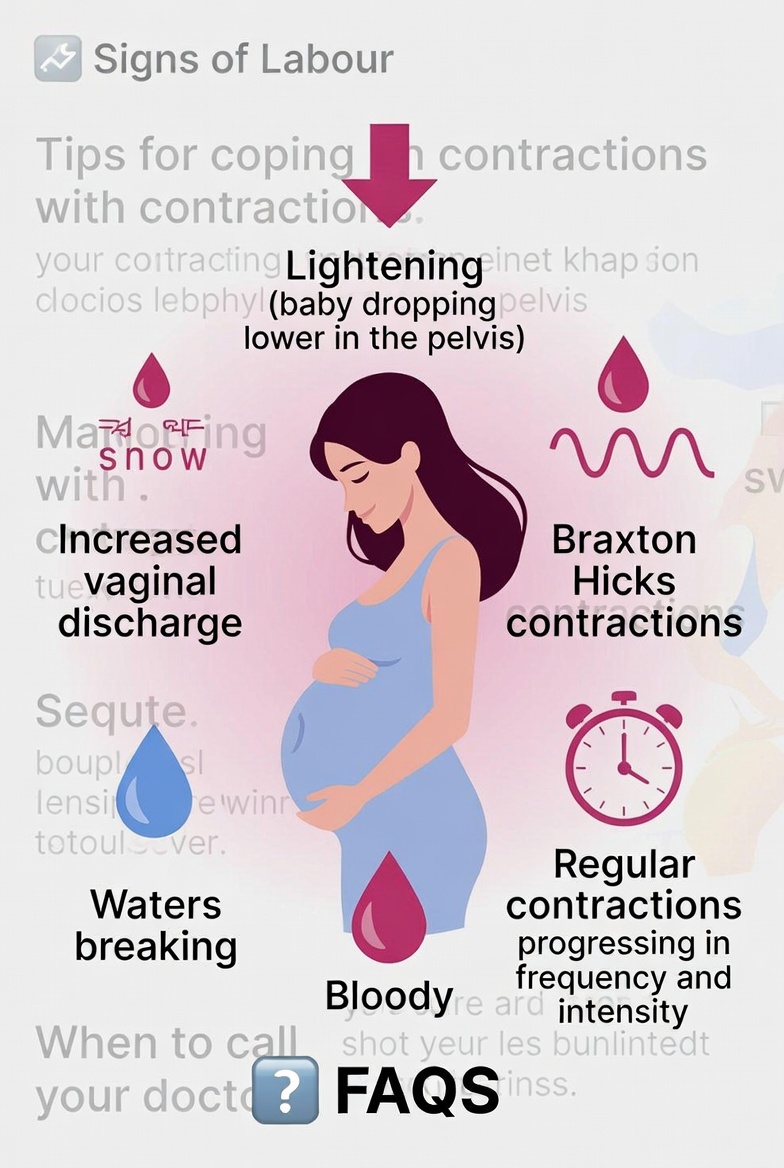
Labour (also called childbirth) is the process where your uterus contracts to dilate the cervix and push your baby out. Recognising the signs helps you know when to prepare, stay calm, or head to the hospital. Signs are often grouped into minor (early or pre-labour indicators that labour may start soon, within days or weeks) and major (true signs that labour has actively begun). Not every woman experiences all signs, and they can vary. This is general information based on trusted sources like Mayo Clinic, NHS, and ACOG—always consult your midwife, doctor, or hospital for personalised advice, especially if you’re in Lagos or anywhere else.
Minor Signs of Labour (Labour is Approaching)
These are preparatory changes in the late third trimester (often from 36–40 weeks). They don’t mean labour has started yet, but signal your body is getting ready.
Lightening (baby drops): Your baby’s head settles deeper into your pelvis. You may breathe easier, feel less pressure on your diaphragm, but more pressure in your pelvis, or need to pee more often. This can happen weeks or just hours before labour.
Increased vaginal discharge or loss of the mucus plug: A thick mucus “plug” that sealed your cervix may come away (or bits of it). You might notice clearer, pink, or slightly bloody jelly-like discharge on your underwear or when wiping. This can happen days before labour.
More Braxton Hicks contractions: These “practice” tightenings feel like mild period cramps or your belly hardening. They are irregular, come and go, and usually stop if you walk, rest, drink water, or change position. They become more noticeable but don’t get stronger or closer together.
Mild cramps, backache, or pelvic pressure: Similar to period pain or a heavy ache. You may feel loose joints or increased pelvic pressure.
Other subtle changes: Some women notice diarrhoea, nesting (sudden burst of energy to clean/organise), or stopping weight gain. These are not always present.
These minor signs can last days or even weeks. Stay relaxed and continue your normal routine.
Major Signs of Labour (Labour Has Begun)
This means active labour is underway (usually the “latent” or early phase first). Contact your healthcare provider right away.
Regular, progressing contractions: These are the key sign. They start mild but become stronger, longer (30–90 seconds), and closer together (every 5–10 minutes or less). They don’t stop with rest, walking, or position changes; pain often starts in the back and moves to the front. You can’t talk or walk easily through them. Time them: note start time, duration, and interval.
Waters breaking (rupture of membranes): The amniotic sac breaks, releasing clear fluid (sometimes a gush, often a trickle). It may be pink-tinged at first. If the fluid is green, brown, smelly, or bloody, or if you’re under 37 weeks, seek urgent care.
Bloody show: A pink, red, or brown mucus discharge (more blood than the minor mucus plug loss). This happens as the cervix opens and is a strong sign that labour is starting or will soon.
Persistent backache or urge to go to the toilet: A heavy, aching back pain that doesn’t ease, or feeling like you need a bowel movement (from baby’s head pressing down).
True labour contractions continue and intensify no matter what you do—unlike false labour (Braxton Hicks), which fades with rest or hydration.
Tips for Managing Signs of Labour
Time your contractions: Use a phone app or note every 5 minutes lasting 1 minute for 1 hour (the 5-1-1 rule) as a common guide to head to the hospital.
Stay at home in early labour: Walk, take a warm bath/shower, drink fluids (including sports drinks), eat light snacks, use breathing techniques, or get a back rub. Rest when possible—early labour can last hours or days.
Prepare your hospital bag in advance: ID, maternity notes, comfortable clothes, pads, phone charger, snacks, and birth plan.
When to go to the hospital or call (urgent in Lagos—contact your clinic, midwife, or nearest maternity unit like Rehoboth Specialist Hospital, Lokoja, or a private hospital):
Contractions every 5 minutes or closer, lasting over 60 seconds.
Waters break (even without contractions).
Heavy bleeding (like a period), constant severe pain, or reduced baby movements.
Before 37 weeks, or if unsure.
In Nigeria, call your doctor/midwife immediately or go to the nearest facility; don’t drive alone if contractions are strong.
Pain relief at home: Paracetamol (as per packet), relaxation, or a warm bath. Avoid sex after water breaks.
Monitor: Check temperature every 4 hours after waters break; report fever.
False alarms are normal—better safe than sorry!
FAQs About Signs of Labour
Q: How can I tell if it’s false labour or true labour?
A: False labour (Braxton Hicks) is irregular, stops with rest/walking/drinking water, and doesn’t get stronger. True labour contractions are regular, build up, and continue regardless of activity. A vaginal exam by your doctor/midwife confirms cervical changes.
Q: What if my waters break but I have no contractions?
A: Labour often starts within 24 hours. Call your midwife/doctor immediately—they may monitor or induce labour to prevent infection. Use a pad (not a tampon) and avoid baths if advised.
Q: Is a bloody show always a major sign?
A: Yes, but a small amount of blood with mucus is normal. Heavy bright-red bleeding is NOT normal—contact help urgently as it could indicate a problem.
Q: How long does early labour last?
A: It varies (hours to days, often longer for first babies). Stay home if possible until contractions are strong and regular.
Q: Can I eat or drink during labour?
A: Yes, in early labour (light snacks and fluids). Hospitals may limit to clear liquids later.
Q: What if I’m not sure?
A: Call your healthcare provider anytime—better to check than worry. In Lagos, many clinics offer 24/7 advice.
Q: Do all women have a “show” or water breaking?
A: No. Some labourers start only with contractions. Every pregnancy is different.
Recognising minor and major signs empowers you to stay calm and prepared. Every labour is unique—trust your body and your care team. If you have any concerns before or during labour, reach out to your doctor or midwife immediately. Wishing you a safe and positive birth experience!